Ideas / A possible direction
Tools for people who build bots
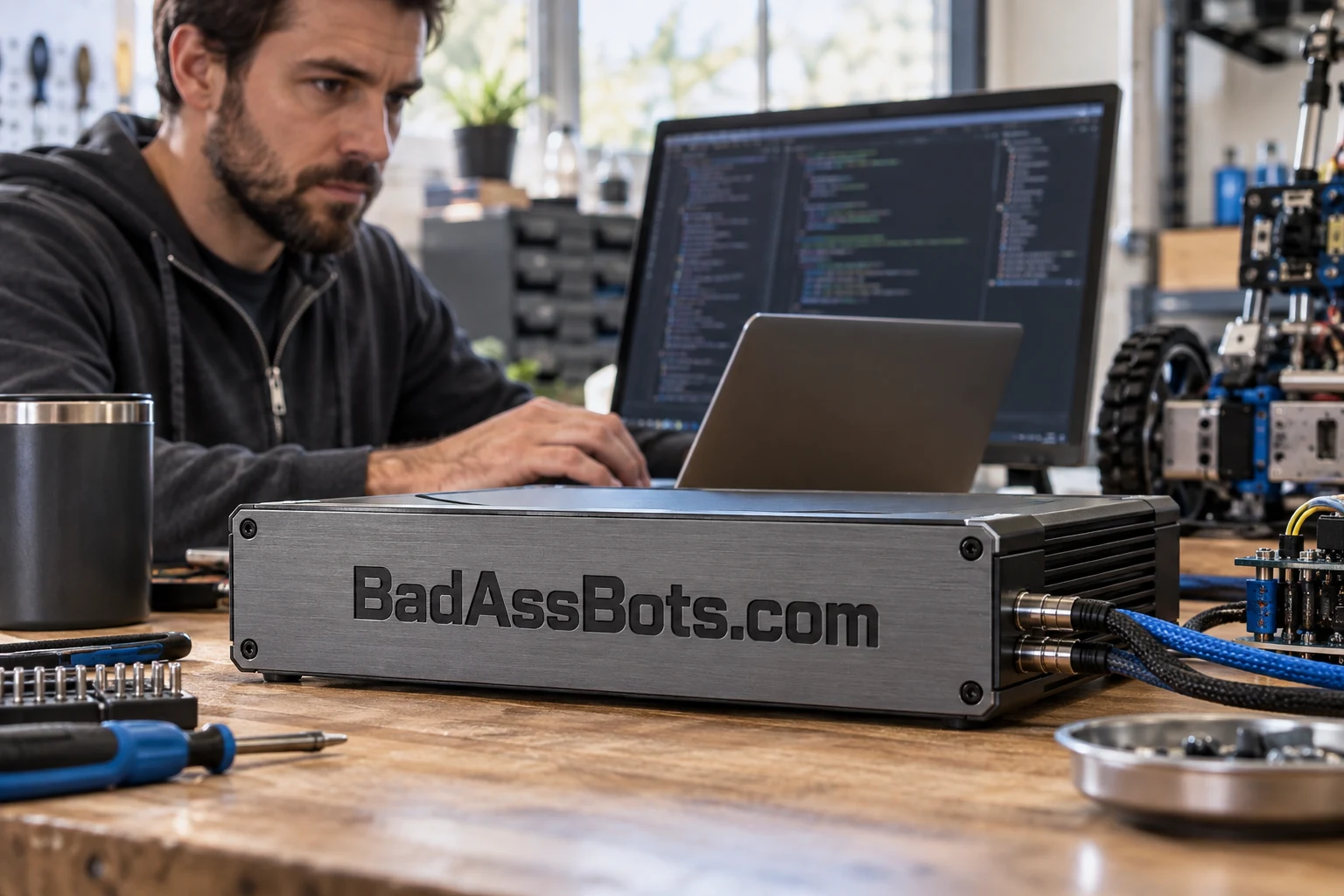
BadAssBots.com could become the home of a developer tool for testing bot integrations. The likely buyer is a small engineering team responsible for a bot that touches several external services. Its problem is specific: a release passes a friendly manual check, then fails when an event arrives twice, a permission changes, or a response takes longer than expected.
This is an illustrative product direction. The name fits a tool that lets developers put their bots through demanding tests and see the results clearly. The first product should earn that tone with useful evidence. A dramatic dashboard has little value if an engineer still cannot reproduce the failure that sent them there.
Start with the incident developers remember
Interview developers about their most recent difficult release. Ask what the user saw, what the logs contained, how the team reproduced it, and which information was missing. Avoid asking whether they would like better testing. Nearly everyone will agree. Look for a repeated diagnostic task they already spend time performing by hand.
One promising first offer is a local event replay tool for a single ecosystem. A developer imports a sanitized event, applies a small set of transformations, and runs it against a test endpoint. The tool reports the request, response, timing, and expected side effects. It should make a five-minute investigation possible without requiring a company-wide observability migration.
Provider tools establish the baseline. GitHub documents webhook redelivery for testing and recovery. A new product needs a clear reason to exist beside those controls. That might be comparing multiple versions of a handler against the same event set, or packaging an incident into a shareable case with sensitive fields removed.
Make the test case portable
A useful case contains a source event, environment requirements, transformation rules, and expected outcomes. If a developer sends the case to a colleague, the colleague should know which bot version to run and what a passing result looks like. Save the case in a reviewable file format so teams can keep it with their code.
For example, a fictional community bot might create a support thread when a member submits a command. A test case sends the same command twice and expects one thread. Another removes the permission to create threads and expects a clear failure message with no misleading success response. A third interrupts the worker after accepting the command and checks the recovery path.
These are business assertions as much as protocol checks. An HTTP success response alone cannot establish that the bot did the right thing. Let developers attach a small verifier that queries their test database or inspects a recorded outbound action. Keep that interface simple enough for a team to adopt in one afternoon.
Respect each platform's behavior
A testing product should avoid flattening every provider into the same generic webhook. Different systems have different acknowledgment deadlines, authentication mechanisms, retry policies, and installation contexts. Maintain a versioned adapter for the first supported platform, with explicit limitations and links to the underlying documentation.
For example, Discord's interaction documentation specifies an initial response deadline and supports deferred responses. A relevant test adapter can check whether a handler acknowledges an interaction promptly while completing longer work separately. That is more helpful than inventing a universal timeout setting and implying it represents every bot platform.
A fixture library also needs maintenance. Give each fixture a source, collection date, and supported API version where applicable. Clearly distinguish an example written from documentation from a sanitized event captured in a real test environment. Developers should be able to inspect the assumptions before treating a test result as release evidence.
Design for private debugging
Bot events can contain member identifiers, message content, account details, and tokens. Make local execution a deliberate product option. Provide field removal and replacement before an event is saved or shared. Show a preview of the sanitized artifact instead of asking users to trust a generic promise that sensitive data has been handled.
Hosted collaboration can come later. If it becomes part of the offer, define retention, deletion, access controls, and the boundaries between projects. An engineer should know who can see an uploaded case and how to remove it. Avoid collecting production payloads merely because they make an attractive demonstration dataset.
Support requests create the same concern. Let a customer generate a diagnostic bundle containing software versions and error categories without automatically including full request bodies. When a payload is necessary, request the smallest relevant example and provide clear instructions for reviewing it before transfer.
Sell the improvement in the team's work
A plausible entry product is a free local runner with a paid team layer for shared cases, scheduled checks, and release history. Treat that as a pricing hypothesis. Interviews and pilot usage must establish which part creates enough value to pay for. An alternative is a paid support package around an open source runner, particularly if customers need help adapting complex internal systems.
Distribution can begin with a concise public repository and a well-explained failure case. Show the failing handler, the replay, the fix, and the assertion that catches a regression. Invite developers to contribute new cases with a documented review process. Useful examples in the communities where developers already troubleshoot integrations can earn more attention than a broad launch slogan.
Measure whether people return to the tool during their next release. Downloads alone can reflect curiosity. Saved cases, repeated runs, and tests committed to a team's repository suggest the product has entered an actual workflow. Interview teams that stop using it and find out which step made adoption too expensive.
Before building a hosted platform, speak with a handful of bot developers and choose one recurring release failure to solve. A small, dependable tool can establish the product's reputation. If that is the business you see under BadAssBots.com, use the inquiry form below to discuss the domain and the developer audience you intend to serve.

About Michael Santiago
Michael founded i-Newswire.com in 2007, growing through iNewswire.com into the category-defining Newswire.com. The business sold to Issuer Direct for $44 million in 2022. That experience informs his belief in clear, memorable names. Today he develops premium domains and companies through OnlineBusiness.com.