Ideas / A possible direction
Automation with a point of view
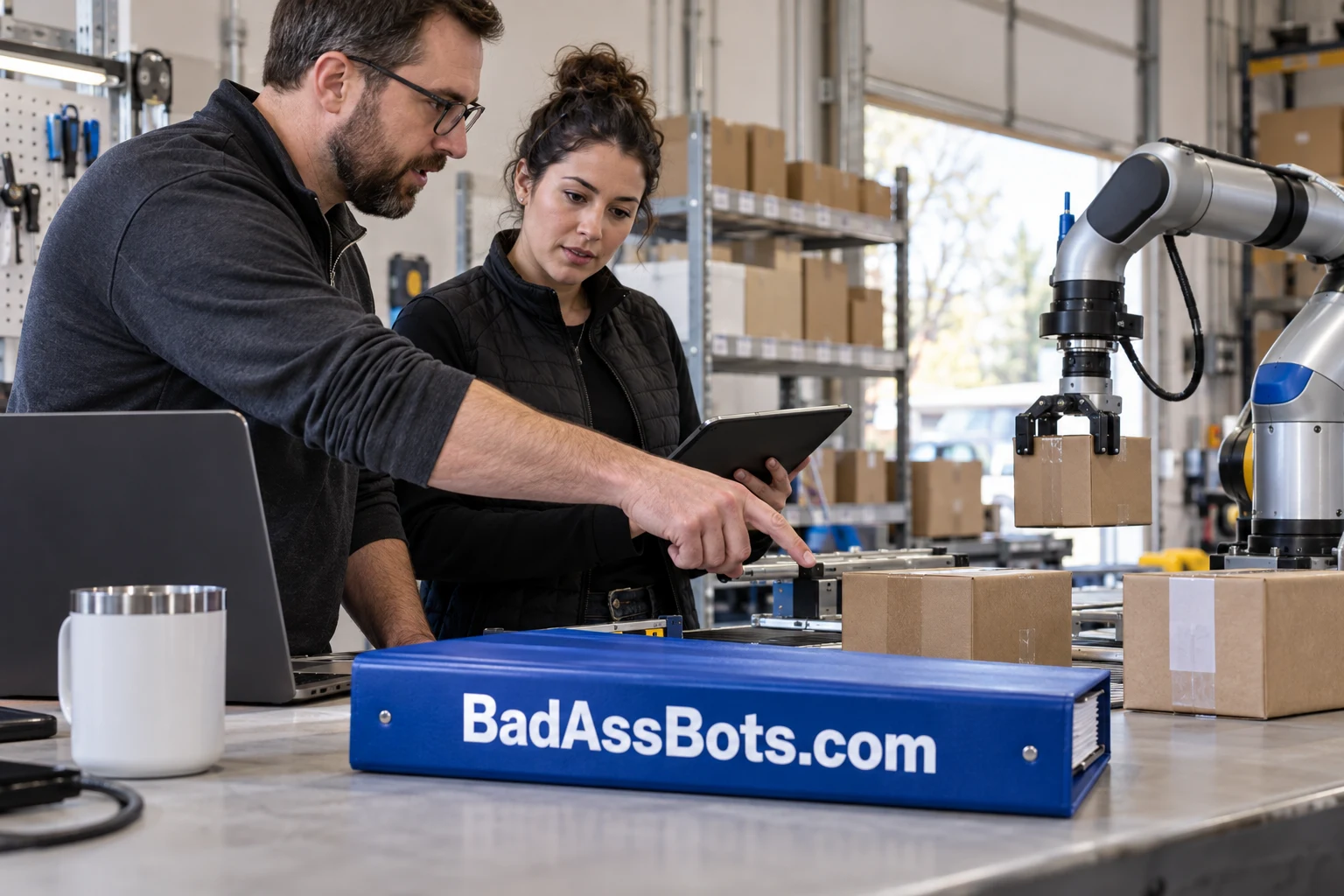
A founder could build an automation studio around BadAssBots.com with a plain promise: take one recurring operational headache, make its rules visible, and build a dependable way through it. The name suits a studio whose confidence comes from showing the work. It gives room for a direct voice, practical demonstrations, and a little personality in a category that often sounds interchangeable.
This is an illustrative business concept. The useful starting customer is a small operations team with an established process and a person responsible for its result. That might be a service business that moves approved project information from an intake system into a delivery board. The team already knows what a correct project looks like. It needs help getting there without copying the same fields all afternoon.
Sell discovery as a real deliverable
The first offer should be a bounded workflow review. Ask the customer to bring recent examples, including cases that went wrong. Observe how work begins, who checks it, where it waits, and what counts as finished. Return a process map, a list of exceptions, an estimate of recurring effort, and a recommendation. Sometimes the recommendation will be to fix an inconsistent form before connecting any software.
A customer should be able to use this document even if another provider builds the automation. That makes the discovery fee easier to explain and encourages honest scoping. It also gives the studio a concrete way to decline poorly defined projects. A request to automate everything in the company becomes a discussion about one input, one decision, and one recorded outcome.
For larger reviews, Microsoft's task mining overview describes how recorded user actions can help reveal task patterns and automation opportunities. A small studio can begin with interviews and an observation sheet. The point is to establish what people actually do before deciding which software should do it.
Choose a repeatable first workflow
Consider project setup after a manager approves an intake record. The proposed automation reads the approved fields, checks required information, creates the project, and stores a link back to the source. An incomplete record goes to a review queue. The automation does not guess the delivery date or invent a missing account owner.
The first scope might include one intake form, one project template, and one destination workspace. Changes to the intake schema require review. A second business unit with different rules becomes a later project. These boundaries are commercially useful because the studio can estimate, demonstrate, and support the work without carrying an undefined obligation.
A pilot should run alongside the existing process long enough to expose ordinary variation. Compare the project created by the proposed workflow with the project the operator expected. Track differences by cause: missing source data, incorrect mapping, an undocumented exception, or an implementation defect. Fix the cause before celebrating the number of successful runs.
Build the maintenance offer before launch
Customers need to know what happens when a connected account loses access or a vendor changes a field. Include a named contact, a monitoring schedule, an incident response arrangement, and a change allowance. State which requests count as maintenance and which require new scope. Reconnecting an expired credential is different from adding an entirely new department.
Keep the customer's accounts under customer control. Document which permissions each integration needs and who can revoke them. Store credentials in the platform's supported secret storage, and avoid turning an employee's personal account into a permanent dependency. At handover, provide enough instructions for another competent operator to understand the service.
Event delivery deserves particular attention. Stripe's webhook documentation explains that duplicate events can occur and describes tracking processed event identifiers. That is one provider's behavior, not a universal contract. For every connected system, inspect its own delivery and retry rules, then write down how the studio's workflow handles repetition and interruption.
Make the economics visible
Price the initial review separately from implementation. For the build, define acceptance in terms of correct business outcomes, not the number of automation steps. A monthly service can then cover monitoring, specified repairs, and a limited amount of change. Avoid promising unlimited improvements before the studio knows how much support a customer requires.
In the project setup example, acceptance could require every approved, complete test record to create exactly one correctly assigned project. Incomplete inputs must remain visible for a person to fix. A forced connection failure must leave a recoverable state. Those conditions give the customer something more useful than a demonstration that works once on a perfect sample.
Track your own delivery effort too. Record hours spent on discovery, implementation, customer training, and post-launch support. A workflow that appears repeatable may hide expensive differences between customers. If the same exception needs custom handling every time, narrow the target market or revise the offer before increasing sales activity.
Find customers through their existing advisers
A credible distribution path is a relationship with consultants who already help the target customers organize their operations. Show these advisers a short walkthrough of the chosen workflow and the review document. They can recognize the problem in an existing engagement without needing to sell a vague transformation program.
Publish one detailed example using fictional records. Show the original task, the decision rules, a failure case, and the resulting review queue. Explain what the customer still owns. That material can serve as a useful conversation starter in a relevant professional community, provided the community welcomes it and the example teaches something beyond the offer itself.
The next move is deliberately small: choose one customer workflow and write its acceptance conditions on a single page. Interview potential buyers about those conditions before building a broad service catalog. If this direct, hands-on positioning fits the business you want to develop, the inquiry form below is the place to discuss acquiring BadAssBots.com and describe your intended use.

About Michael Santiago
Michael founded i-Newswire.com in 2007, growing through iNewswire.com into the category-defining Newswire.com. The business sold to Issuer Direct for $44 million in 2022. That experience informs his belief in clear, memorable names. Today he develops premium domains and companies through OnlineBusiness.com.